
How to Generate Roofing Leads From Old Hail Storms
Most contractors move on when the next storm hits. Here's how to find old hail storms and pull leads from the roofs nobody replaced.

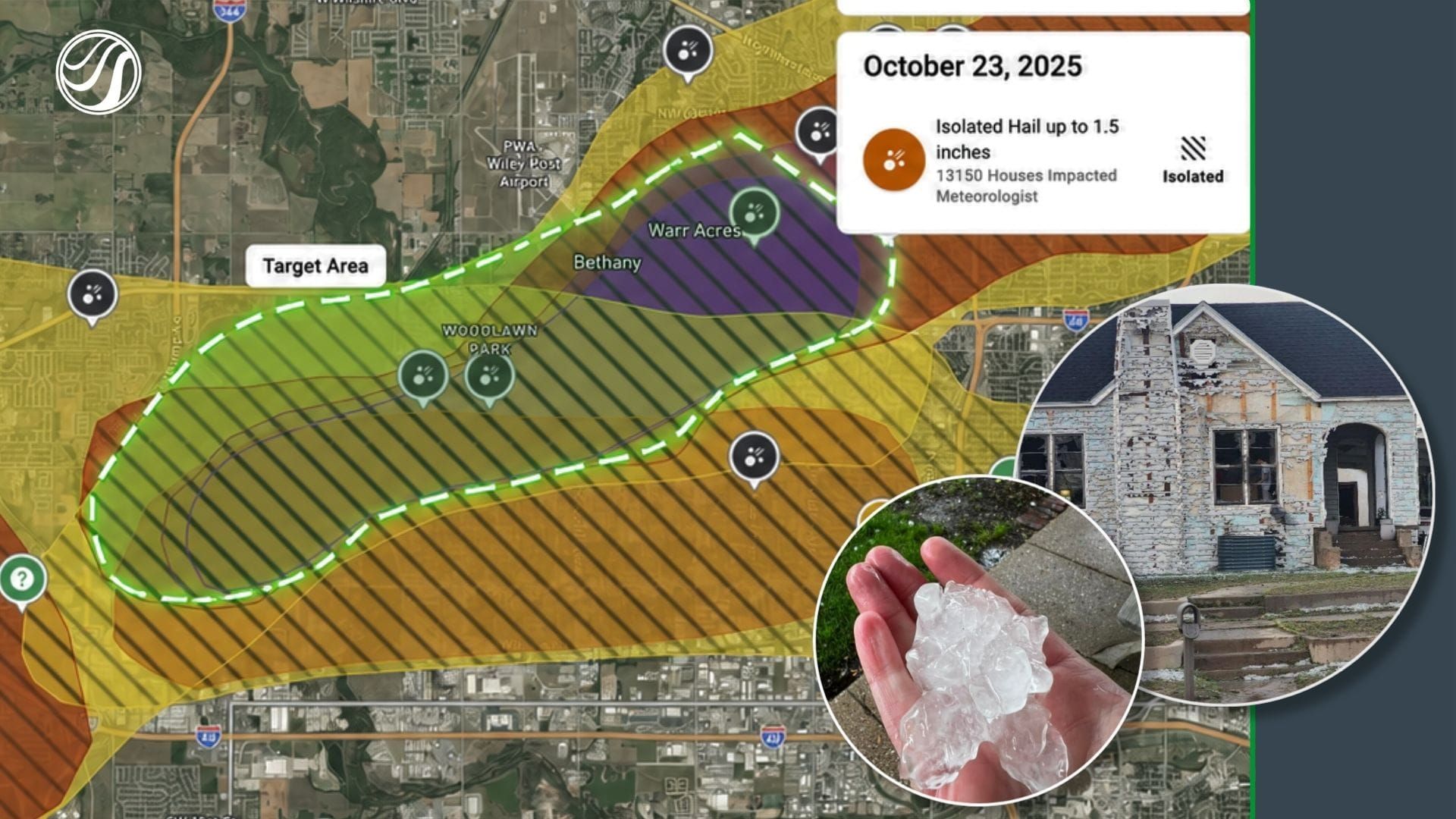
If you're looking for more roofing leads without waiting on the next hailstorm, this article will show you how to:
- Understand why old storms continue to generate roofing leads months after they happen.
- Find old storms worth reworking.
- Identify neighborhoods with the highest potential for storm leads.
- Turn old storms into roofing sales using Lead Lists and Weather History Reports.
- Start better conversations with homeowners months after a storm.
When most roofers think about generating roofing leads, they think about speed.
As soon as hail falls, crews head to the hardest-hit neighborhoods, sales reps start knocking doors, and marketing campaigns begin. For the next few months, everyone is focused on working that storm.
Then the next storm hits.
Sales teams move to a new market, marketing shifts to a new hail path, and the previous storm is left behind. It's a cycle the roofing industry repeats every storm season.
But what if some of your best storm leads aren't in the newest storm?
Long after most contractors have moved on, thousands of damaged roofs are still waiting to be replaced.
Some homeowners don't realize they have damage. Others aren't ready to file an insurance claim. Some simply delay making a decision until months later.
That creates an opportunity many contractors overlook: reworking old storms.
Instead of competing with every roofer chasing the latest hailstorm, you can revisit older storms where damaged roofs still exist, competition has largely disappeared, and new roofing leads are still waiting to be found.
Why Old Storms Still Make Money
One of the biggest misconceptions in storm restoration is that if a storm happened 10 months ago, all the roofing opportunities are gone.
They're not.
Many damaged roofs don't get replaced immediately after a hailstorm. Some property owners file a claim the next day, while others wait months—or even years.
Why Old Storms Still Make Money
Billions in Damage from March 10, 2026
Take the March 10, 2026 hailstorm, for example. According to Canopy Weather, our sister brand serving insurers and government, the March 10 hailstorm produced:
- 9 states impacted across the Midwest and Southern Plains
- Hail up to 4 inches in diameter
- $2.8 billion in estimated property damage
- More than 1.25 million impacted structures
- Over 126,000 estimated insurance claims
That's an incredible amount of storm damage from a single day.
Yet many property owners delayed replacing their roof, leaving thousands of storm leads available long after most contractors had moved on.
So why does that happen?
One explanation comes from Geoffrey Moore's book Crossing the Chasm.
While the book explains how people adopt new technology, the same concept applies surprisingly well to roof replacements after a storm.
Like technology, roof replacements follow an adoption curve.
Crossing The Chasm in Technology
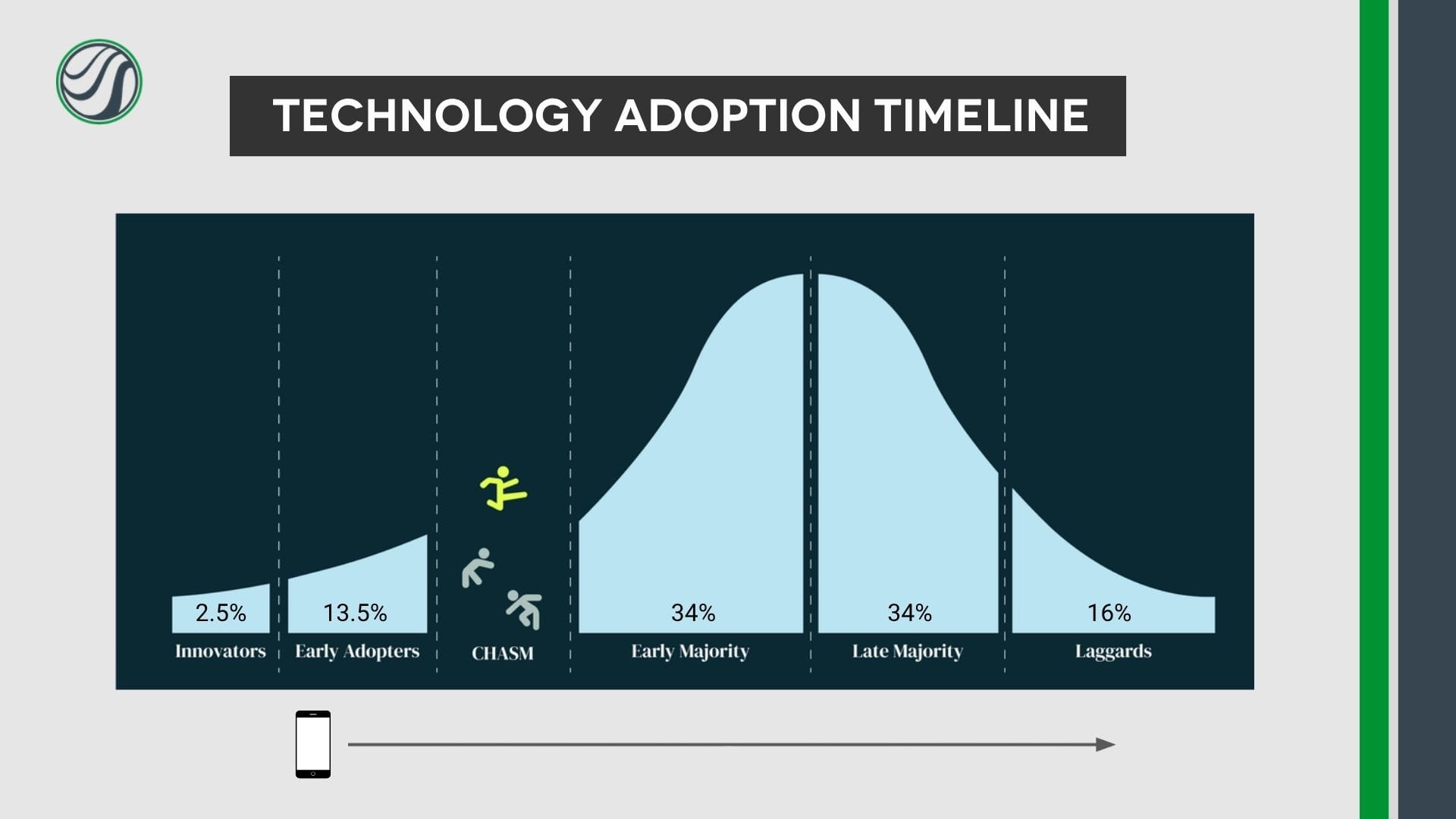
When a new technology is released, adoption typically follows this pattern:
- Innovators & Early Adopters (16%) – Try new technology immediately and are willing to work through the learning curve.
- Early Majority (34%) – Wait until the technology has proven itself before adopting it.
- Late Majority (34%) – Hold off until the technology becomes widely accepted and others are already using it.
- Laggards (16%) – Resist adopting new technology until the very end or never adopt it at all.
Crossing The Chasm in Roofing
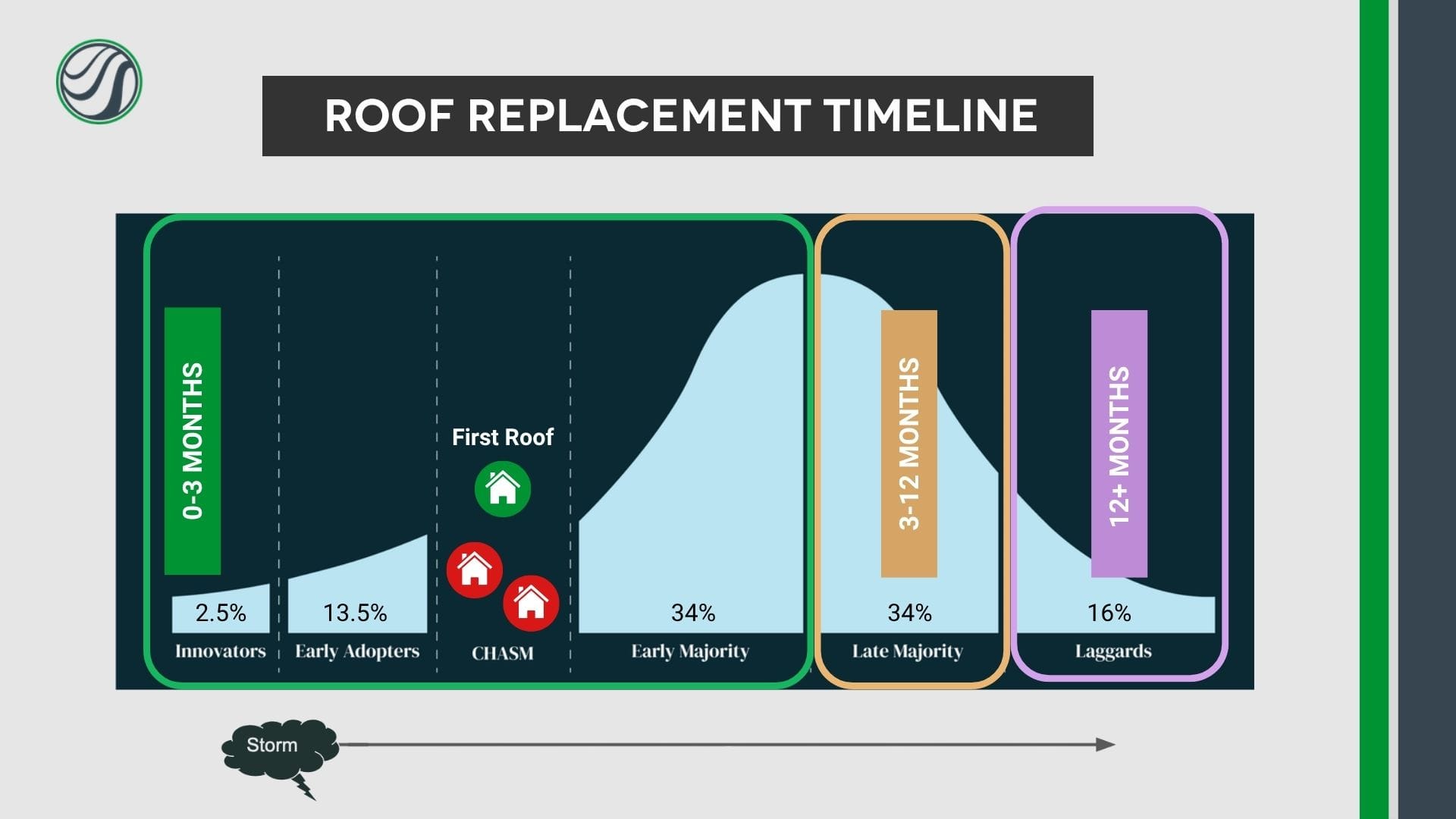
The same pattern often happens after a hailstorm:
- Innovators & Early Adopters (0–1 Months | 16%) – File a claim immediately and become the first roofs replaced after a storm.
- Early Majority (2–3 Months | 34%) – Wait to see neighbors replace their roofs before feeling confident enough to file a claim.
- Late Majority (3–12 Months | 34%) – Delay replacing their roof until damage becomes more obvious or the claim deadline gets closer.
- Laggards (12+ Months | 16%) – Wait until the last minute to file a claim or miss the deadline and replace their roof as a retail project.
Most roofing companies spend nearly all of their time chasing the first wave of homeowners immediately after a storm.
But roughly half of the damaged roofs are still waiting for a decision months later.
The storm may be old. The opportunity often isn't.
Step 1: Find Old Storms Worth Reworking
Understanding why old storms continue to generate roofing leads is only half the battle.
The next step is knowing where to look.
Rather than waiting for the next hailstorm, use HailTrace to identify storms that still have sales potential. Three types of storms are especially worth targeting.
HailTrace App Walkthrough: Find Old Storms
3-10 Month Storms Worth Reworking
Storms from the past several months often still contain homeowners who never filed a claim. These storms can generate roofing leads long after the initial rush has ended.
Storms Near the Insurance Claim Deadline
Many insurance policies limit how long a homeowner has to report storm damage. Deadlines vary by policy and state. As a deadline approaches, many property owners finally decide to take action.
Retail Opportunities
Once the claim window has closed, storm damage doesn't disappear. Many roofs eventually become retail replacements, creating another source of roofing sales.
Using HailTrace's date filters and radius search, you can quickly identify which older storms are still worth working instead of guessing where to prospect next.
Step 2: Pick Neighborhoods With the Best Storm Leads
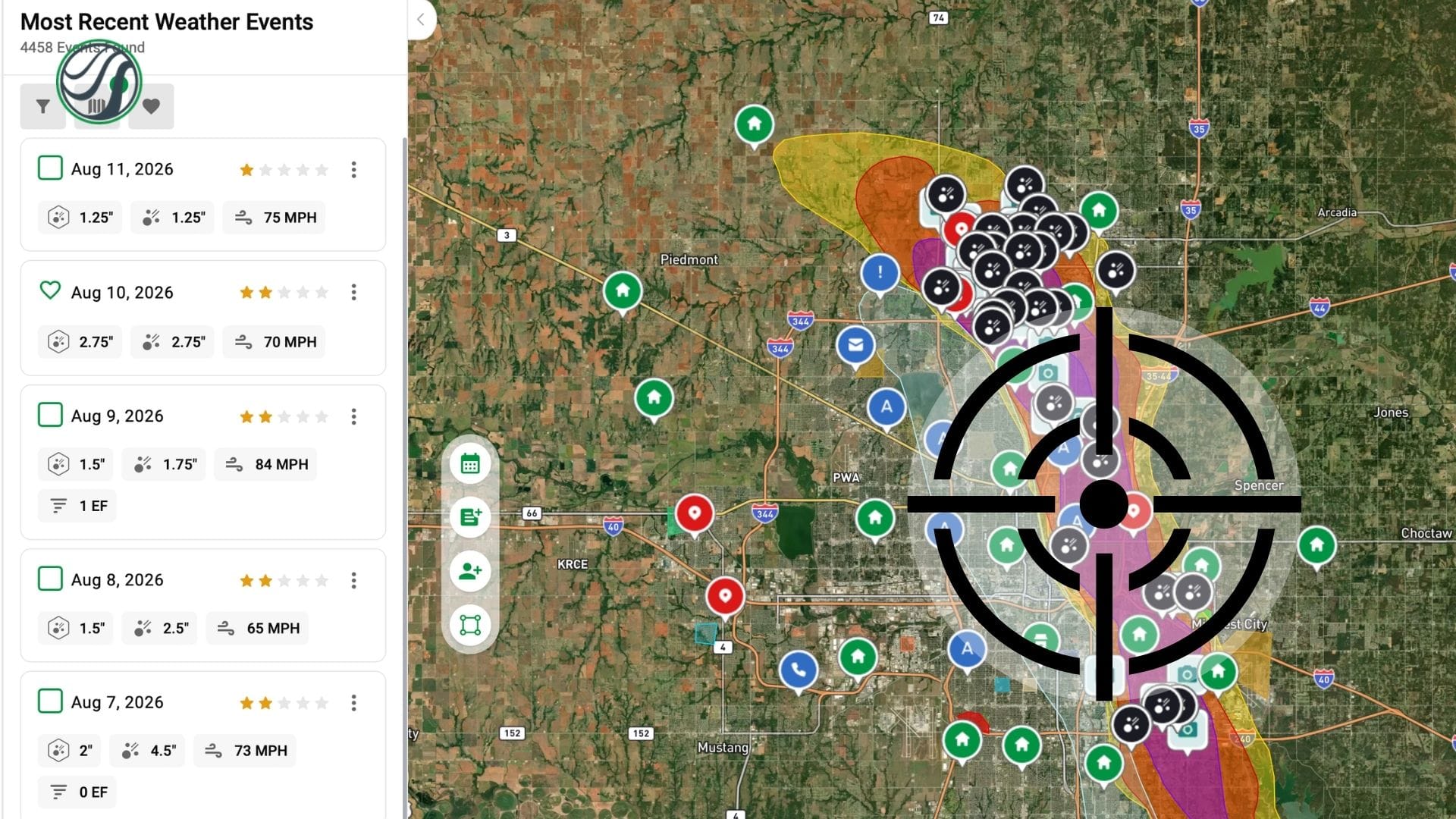
Finding an old storm is only the beginning.
The real goal is identifying the neighborhoods most likely to generate roofing leads.
Here are five things to evaluate.
HailTrace App Walkthrough: Choose Target Area
1. Storm Severity
Start with the storm rating.
HailTrace rates every storm from 1 to 5 stars.
- 1-Star storms generally produce lighter, more isolated damage with fewer impacted properties.
- 5-Star storms represent widespread damage, larger hail or stronger winds, and significantly more roofing opportunities.
If you're deciding between multiple storms, start with the highest-rated ones.
2. Multiple Storm Impacts
Neighborhoods hit multiple times deserve another look.
When storm paths overlap, roofs often experience cumulative damage, making these neighborhoods excellent sources of storm leads.
3. High-Volume Storms
Some storms produce isolated pockets of hail.
Others impact entire neighborhoods.
HailTrace identifies low-volume and high-volume hail swaths, helping your team focus on areas where the greatest number of properties were affected.
4. Storm Details
One of the first questions every roofer asks is:
"Where was the storm the worst?"
HailTrace combines hail size, wind speed, storm duration, and impacted properties into one easy-to-read storm map so you can quickly identify neighborhoods most likely to generate roofing sales leads.
5. Your Ideal Customer
The best neighborhood isn't always the one with the biggest storm.
Maybe your company focuses on:
- Residential neighborhoods
- Commercial properties
- Higher-value homes
- Older roofs
- Dense subdivisions
- Areas where you've completed previous work.
The best storm leads come from neighborhoods that fit your business—not simply the biggest storm.
Step 3: Turn Old Storms Into Roofing Leads

Finding the right neighborhood is only half the battle.
Now it's time to turn storm data into conversations.
HailTrace App Walkthrough: Generate Storm Lead
Generate Targeted Storm Leads
Instead of knocking every door in a city, start with a targeted Lead List.
Within HailTrace, you can quickly generate:
- Residential property owners
- Commercial property owners
- Existing customers impacted by the storm
These targeted roofing leads allow your sales team to spend more time talking to property owners who were actually impacted and less time prospecting neighborhoods that were never affected.
Build Trust With a Weather History Report
Working an old storm requires a different conversation than working a fresh one.
Many homeowners don't remember a storm from eight or ten months ago, and others are understandably skeptical when someone says their roof may have been damaged that long ago.
A Weather History Report helps bridge that gap.
Rather than asking homeowners to trust your memory or a weather app, you can show them the documented hail and wind history for their address.
Starting the conversation with objective weather data builds credibility, creates trust, and makes it easier to explain why an inspection is still worthwhile.
What Do You Say When Knocking Doors Months Later?
Finding a homeowner is one thing. Starting the conversation is another.
One of the first questions you'll hear is:
"Why are you knocking almost a year after the storm?"
A simple talk track might sound like this:
That's actually why I'm here.
We're going back through the March 10th storm because we keep finding roofs on this street nobody ever got up on.
I've got the weather history for your address right here. It tells me what came down over your house that day. It doesn't tell me the one thing (damage or not) about your roof. Only way to know that is if somebody gets up there.
When's the last time anyone's been on yours?
This approach shifts the conversation away from a sales pitch and toward education.
You're not telling a homeowner they have damage—you’re helping them understand why it's still worth having their roof inspected.
Stop Waiting for the Next Storm
The best roofing leads aren't always found after the next hailstorm.
Sometimes they're sitting in neighborhoods everyone else stopped working months ago.
By understanding how homeowners make decisions, finding storms worth reworking, identifying the right neighborhoods, and leading every conversation with trust, you can generate roofing leads throughout the year—not just when the weather cooperates.
Go Find an Old Storm
- Create a free account
- Set your radius around your service area
- Filter storms by date and see what's still sitting there
On a free account? We'll pull up your market and show you the storm history sitting under it.
Already a customer? Set your radius and filter to storms near a claim deadline. Your customer success specialist can walk your team through it.