
Costliest Weather in 2026... So Far: $3 Billion Freeze and Record-Breaking Hail
Florida's freeze wiped out an estimated $3.17 billion in crops, and March hail storms hit more than 1.25 million structures in a single day. Here's a look at the high-dollar weather events of 2026 so far.


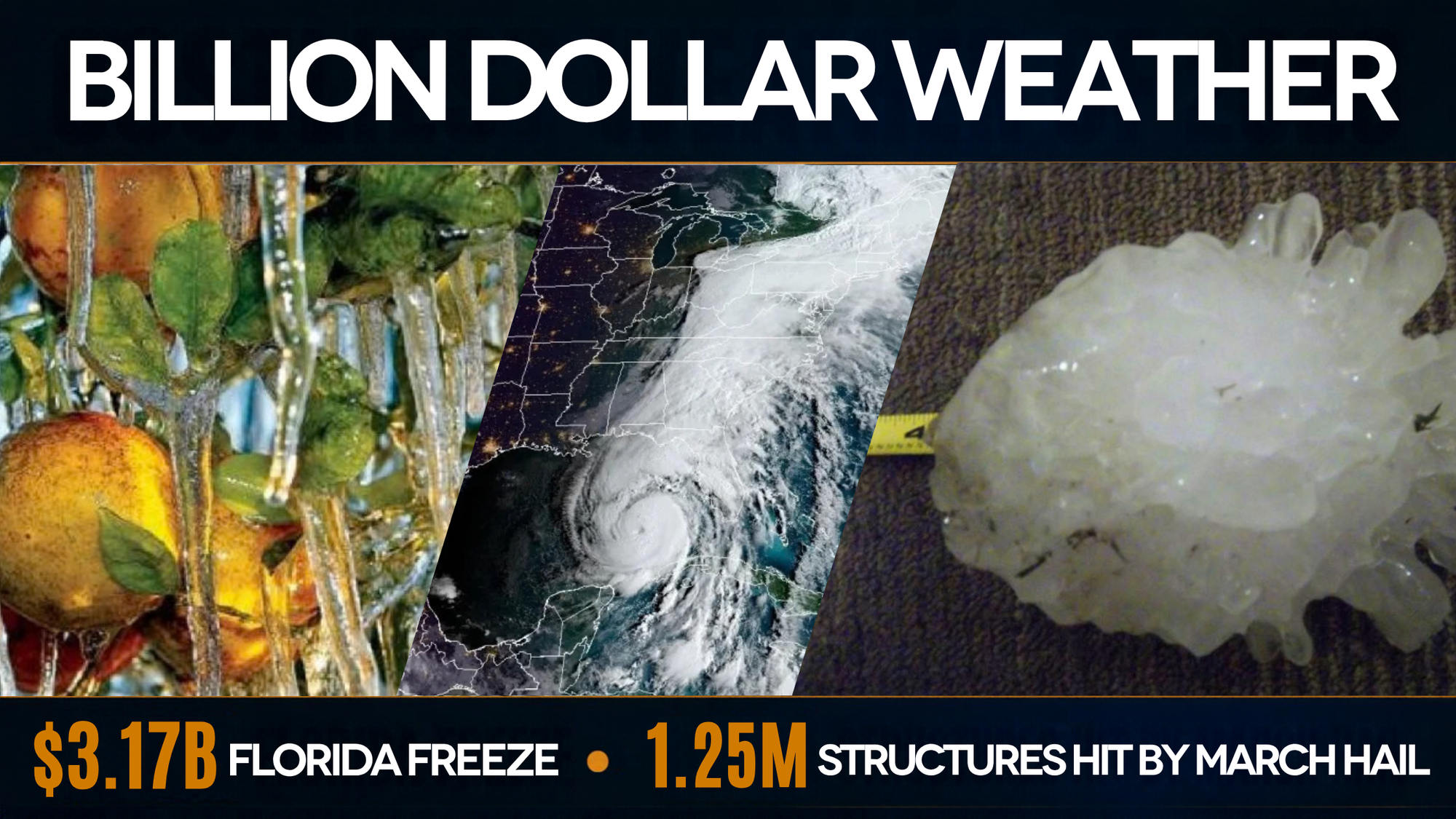
When most people think of billion-dollar weather disasters, they picture hurricanes, tornado outbreaks, and giant hail. 2026 has delivered plenty of that. But the most expensive event of the year so far didn't come with a landfall, a funnel cloud, or a single hailstone. It came with a thermometer reading 23°F in Daytona Beach.
The $3.17 Billion Florida Freeze
Florida's winter turned into one of the most damaging agricultural disasters in state history. The Florida Department of Agriculture's preliminary estimate puts losses at $3.171 billion, and state officials called it one of the most damaging agricultural freezes in decades.
That number covers two separate cold outbreaks: Winter Storm Ezra (December 30, 2025 to January 1, 2026) and Winter Storm Gianna (January 26 to February 4, 2026).
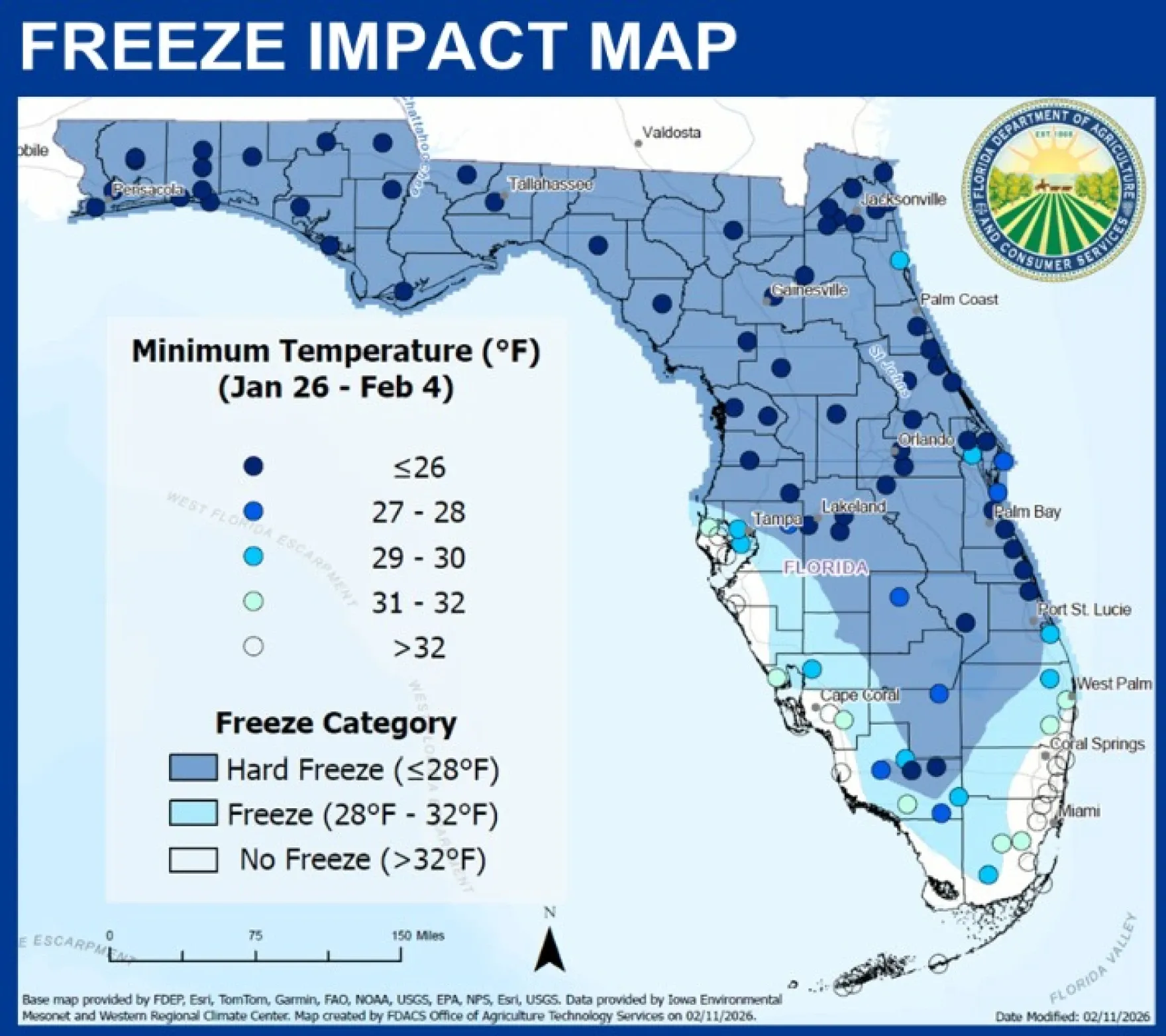
The scale was hard to believe. 66 of Florida's 67 counties saw freezing temperatures for multiple hours. The only county spared was Monroe County, home of the Florida Keys.
Where the Money Went
Nearly every major sector of Florida agriculture took a hit.
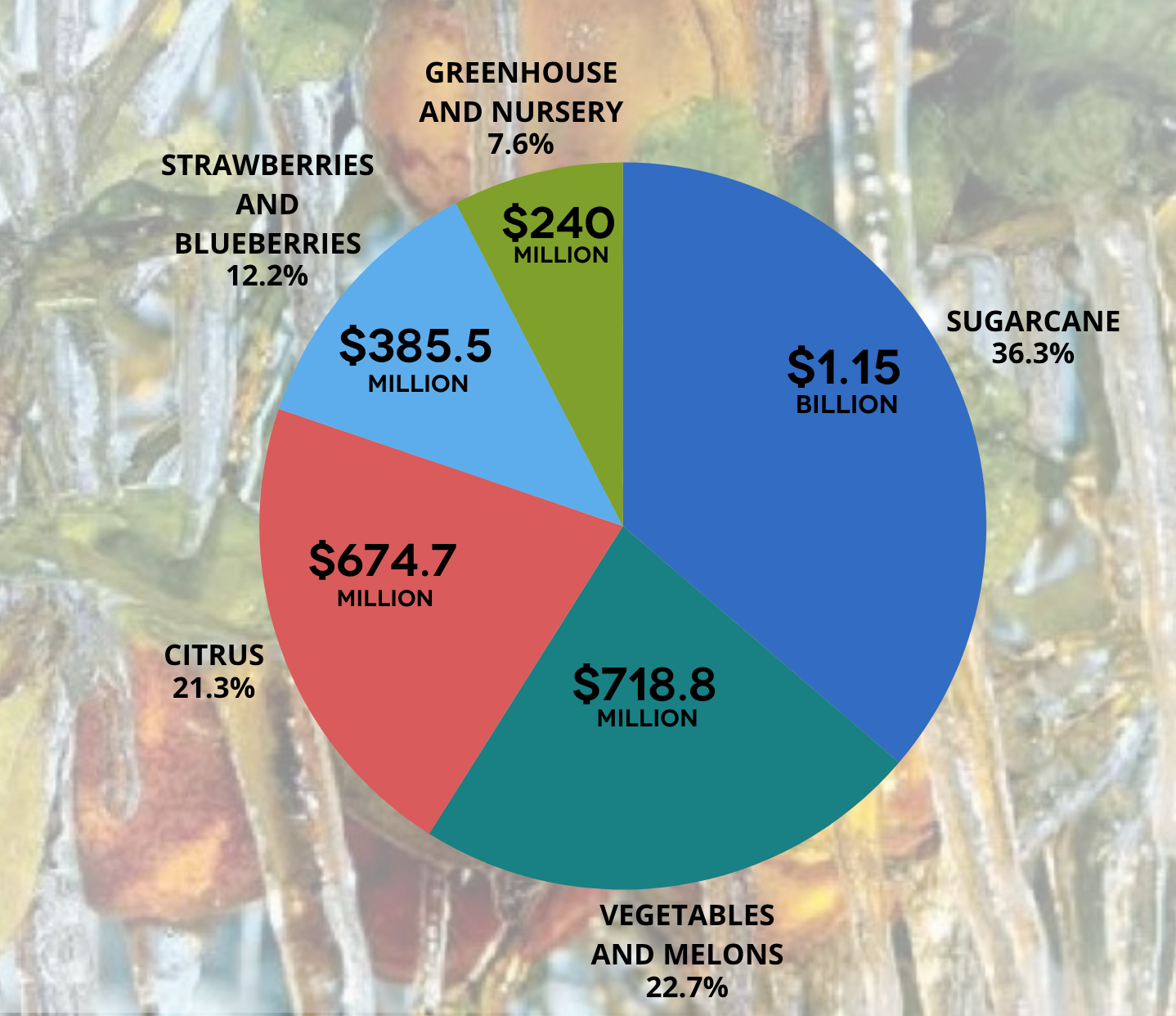
Sugarcane, vegetables, and citrus alone made up about 80% of the total.
Some individual crops were nearly wiped out:
🌽 Sweet corn: an estimated 100% production loss across about 45,000 acres, worth $255.4 million
🫐 Blueberries: about 90% of the crop lost, totaling $78.5 million
🍓 Strawberries: about 80% of the remaining harvest lost, totaling $307 million
🍅 Tomatoes: 80% estimated loss across 27,900 acres, about $164.3 million
🫑 Bell peppers: 80% estimated loss, about $108.4 million
Squash (90%) and potatoes (75%) also saw major losses. Even tropical fish farms were affected, with some facilities reporting losses approaching 75%.
The Damage That Hasn't Happened Yet
About $797 million, or 25% of the total, is tied to future production. The cold is long gone, but damaged trees and perennial crops can't bounce back overnight.
Sugarcane is the clearest example. About 401,000 acres were affected, with an estimated $576 million lost this season and another $576 million projected over the next three years:
- 2027: $329.2 million
- 2028: $164.6 million
- 2029: $82.3 million
Citrus faces a similar road. About 80% of Florida's commercial citrus acreage was significantly affected, and producers estimated 15% tree loss in impacted areas. The state projects an average 27% annual productivity loss for multiple years before the industry returns to pre-freeze levels.
The weather event lasted days. The business impact could last years.
A Cold Snap for the Record Books
The harshest arctic air arrived around January 31 to February 3. Palmdale dropped to 22°F, the lowest temperature measured in South Florida all winter. Freezing temps even reached inland parts of Miami-Dade and Broward counties, and possible snow flurries were reported near Naples and LaBelle.
East-central Florida set a string of February records:
- Daytona Beach: 23°F (all-time February record low)
- Leesburg: 23°F (all-time February record low)
- Sanford: 23°F (all-time February record low)
- Fort Pierce: 23°F (all-time February record low)
- Orlando: 24°F (February 1 record; previous record was 28°F)
- Melbourne: 24°F (all-time February record low)
- Vero Beach: 26°F (all-time February record low)
Talk about weather whiplash, the speed of the change was wild. West Palm Beach hit a record 90°F on January 26, then fell to 30°F on February 1 and 2. That's a 60-degree swing in less than a week. Miami went from 88°F to 35°F over the same stretch. Palm Beach International Airport's back-to-back 30°F mornings were its first since 1989.
To make matters worse, Florida was also dealing with extreme dryness. The state's emergency declaration reported critical dry soils over more than 95% of Florida and about 120 active wildfires burning 9,700 acres.
Bigger Than a Hurricane
Here's the stat that puts it all in perspective. Hurricane Ian, a Category 4 storm that devastated Southwest Florida, caused about $1.07 billion in agricultural losses. Florida's three 2024 hurricanes, Debby, Helene, and Milton, combined for roughly $1 billion.
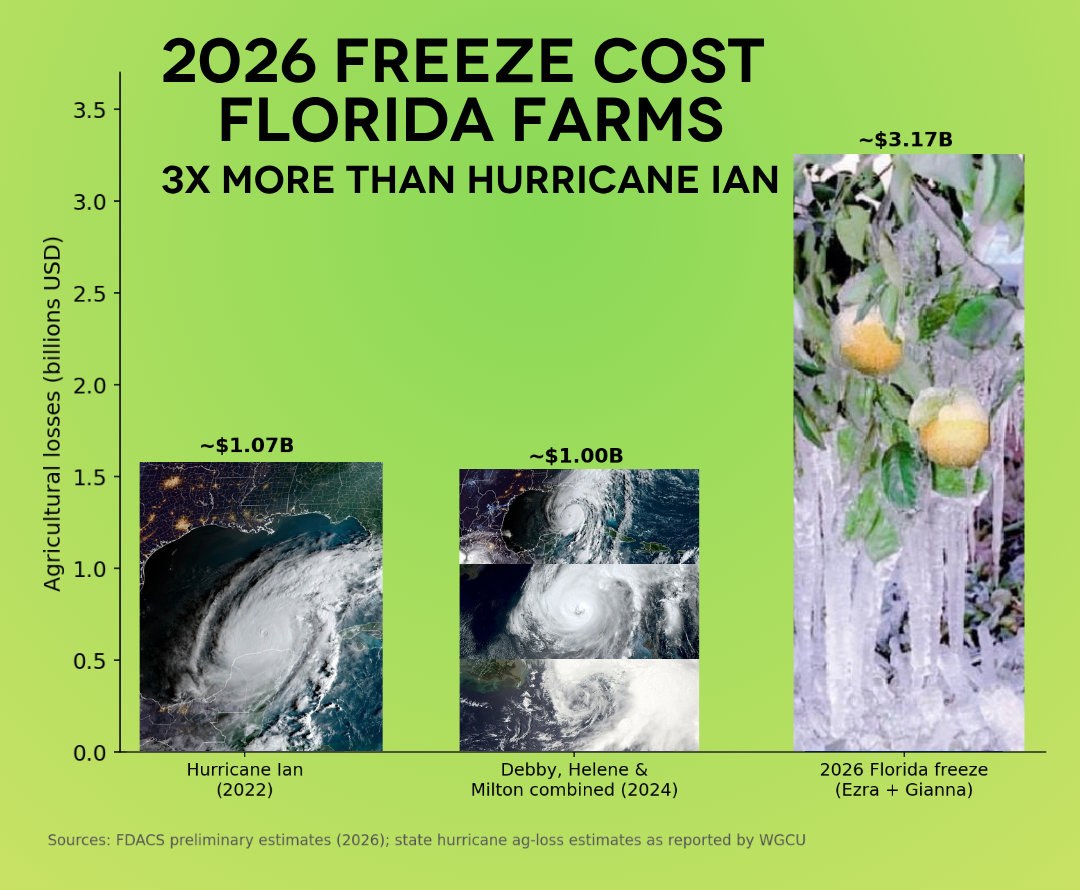
This freeze caused nearly three times Ian's agricultural damage, and more than all three 2024 hurricanes combined, without storm surge, tornadoes, or major wind.
March 2026: Tornadoes, Record Hail, and 1.25 Million Structures Hit
While Florida was counting its losses, the central U.S. kicked off spring in a big way. March brought 50+ confirmed tornadoes, multiple 5-star hailstorms, and a new state hail record.
March 5-7: The First Outbreak
Spring's first severe weather outbreak turned deadly on March 5, when a nocturnal EF-2 tornado in Fairview, OK crossed U.S. Highway 60 and killed two people.
On March 6, storms across multiple states produced 30+ confirmed tornadoes, including EF-2s and EF-3s, with hail exceeding 4 inches in southern Texas. The next day, hail up to 4.50" fell along the Rio Grande in Texas, earning the year's third 3-star hail map.
March 10: One of the Busiest Hail Days on Record
March 10 ranked as the 5th busiest hail day on record. Large hail and tornadoes hit nine states: Illinois, Oklahoma, Missouri, Kansas, Texas, Indiana, Michigan, Iowa, and Wisconsin.
The numbers tell the story:
- 1,254,370+ structures impacted
- 20 metros and 854 cities affected
- 100+ reports of significant hail
- Two 5-star hailstorms on the same day
In Kankakee, IL, a hailstone measuring 6.14 inches set a new Illinois state record, and it was likely even larger before it began to shrink. A violent tornado also tracked from Bloomington to Kankakee, prompting a PDS (Particularly Dangerous Situation) warning.

Closer to home for many of our readers, a tornado-warned supercell passed over the Oklahoma City metro, and the city ended up with a 3-star hail event.
Late March: Lemon-Sized Hail and a Rare New York Storm
On March 27, storms across central Illinois, northern Indiana, and Ohio produced hail up to baseball size, hitting an area that had been struck repeatedly throughout March. Then on March 31, a rare hailstorm hit Gowanda, NY with hail up to 1.50", impacting 10,000+ structures with 1"+ hail.
Why the Quiet Disasters Matter
2026 has already shown two very different faces of expensive weather. One was loud and fast: record hail, tornado warnings, and over a million structures hit in a single afternoon. The other was quiet and widespread: a freeze that caused more agricultural damage than a Category 4 hurricane.
The biggest headlines don't always follow the biggest financial impact. Understanding weather risk means knowing not just what happened, but who was affected, how severe it was, and how long the consequences will last.
Work from storm data built for real decisions. HailTrace gives contractors meteorologist-mapped hail data, live alerts, and tools to help teams target the right areas with more confidence. Request a demo to see how HailTrace helps you move faster after a storm.